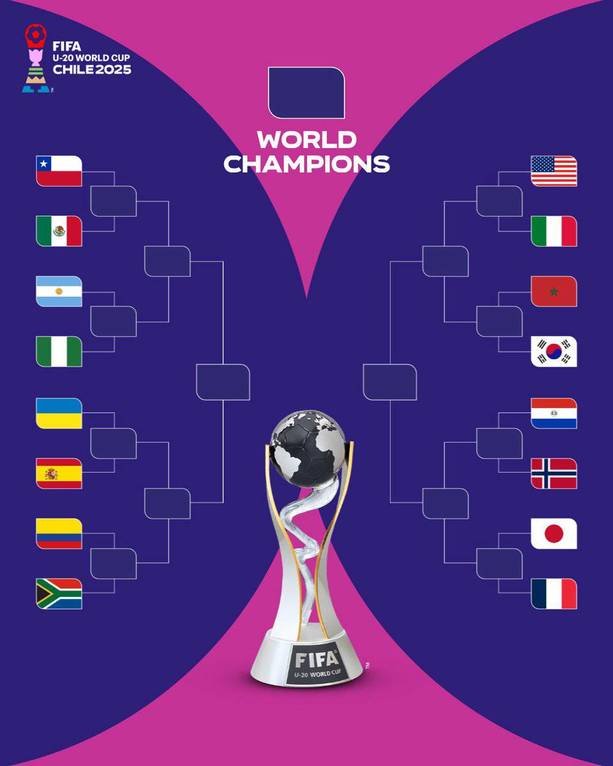
The landscape of international youth football is a crucible where future stars are forged, and for the Mexican national team, the upcoming Torneos y Competiciones México Sub-20 represent more than just games—they're pivotal steps in a grander development strategy. As the U-20 squad, led by head coach Eduardo Arce, gears up for the prestigious Maurice Revello Tournament 2025, the stakes are higher than ever. This isn't just about winning matches; it's about building experience, testing resilience, and shaping the next generation of Mexican footballing talent on the global stage.
Think of it as the ultimate proving ground before the main event: the FIFA U-20 World Cup. Every pass, every tackle, every tactical decision made in these preliminary tournaments contributes to a larger narrative, one that could see Mexico's brightest young players making waves in Chile in late 2025.
At a Glance: Mexico U-20's International Challenge
- Key Tournament: Maurice Revello Tournament 2025 (formerly Esperanzas de Toulon), a renowned proving ground for young talent.
- Ultimate Goal: Preparation for the FIFA U-20 World Cup, hosted in Chile from September 27 to October 19, 2025.
- Head Coach: Eduardo Arce, tasked with developing both individual players and team cohesion.
- Group Stage Rivals (Maurice Revello): Denmark, Japan, and Congo – a diverse mix of European, Asian, and African footballing styles.
- Crucial Dates: Matches scheduled for June 4, June 7, and June 10 (CDMX times).
- Recent Form: Mixed results from a preparation tour in Alicante, Spain, including a dominant win but also losses against strong opposition.
The Road to Glory: Why U-20 Competitions Matter Beyond the Scoreboard
For many, youth tournaments are merely a precursor to senior football. But for national federations like Mexico's FMF, and particularly for the U-20 setup, these competitions are the bedrock of future success. They serve as a critical bridge, easing promising young players from the sheltered environment of club academies into the unforgiving world of international professional football.
Consider the journey: a talented teenager excelling at the local level might feel ready for anything. However, the unique pressures of playing against different styles, in unfamiliar stadiums, under the glare of international scouts and media, is an entirely different beast. U-20 tournaments provide this essential exposure, teaching players to adapt on the fly, manage nerves, and perform under intense scrutiny. It’s where raw talent begins to be chiseled into seasoned professionals.
Beyond individual development, these events foster a collective identity. Players, often rivals in their domestic leagues, must learn to collaborate, communicate, and fight for a common cause. This shared experience builds camaraderie and understanding that can pay dividends for years, potentially forming the core of a future senior national team. The prestige of tournaments like the Maurice Revello, renowned for unearthing talents like Thierry Henry, Alan Shearer, and even Mexican stars like Hirving Lozano in their early days, also means the scouting presence is immense. A standout performance can quite literally change a young player's career trajectory overnight.
Maurice Revello 2025: Mexico's Next Big Test
The Maurice Revello Tournament, steeped in history and often dubbed the "Olympics of Youth Football," is far more than just a friendly competition. For Eduardo Arce's México Sub-20 squad, it's a high-stakes dress rehearsal for the U-20 World Cup. This year, Mexico finds itself in Group B, alongside a challenging trio of opponents: Denmark, Japan, and Congo. Each match presents a unique tactical puzzle and a chance for the young squad to prove its mettle.
Breaking Down Group B: Diverse Challenges Await
Mexico vs. Denmark (Wednesday, June 4 | 9:30 AM CDMX | Sede: Fos)
Denmark typically brings a well-organized, physically robust, and tactically disciplined team to youth tournaments. Their style often emphasizes collective pressing, efficient transitions, and a strong defensive foundation. For Mexico, this opening match will be a crucial test of their ability to break down a compact defense and resist consistent pressure. It's an opportunity to set the tone for the tournament and gauge their preparedness against a classic European footballing approach.
Japan vs. Mexico (Saturday, June 7 | 6:00 AM CDMX | Sede: Avignon)
Japanese youth teams are renowned for their technical proficiency, swift passing, and intelligent movement off the ball. They often play with high energy, focusing on intricate link-up play and quick attacks. This encounter will challenge Mexico's defensive organization and demand precision in possession. It's a chance to compete against a style that prioritizes finesse and tactical fluidity, pushing the Mexican players to match both their physical and mental speed.
Congo vs. Mexico (Tuesday, June 10 | 9:30 AM CDMX | Sede: Aubagne)
African youth teams, including Congo, frequently exhibit raw athleticism, impressive physicality, and unpredictable flair. Their players often possess explosive pace and powerful shooting, making them dangerous opponents, especially in transitions. This match will require Mexico to be disciplined in their marking, resilient in duels, and adept at controlling the tempo against a potentially chaotic but highly dynamic adversary. It’s a test of mental fortitude and adaptability against a less conventional but equally potent style.
The schedule itself demands significant recovery and adaptation. With matches spaced out every three days, players will face intense physical demands, traveling between venues and maintaining peak performance. This rhythm closely mimics the grind of a major international tournament, providing invaluable experience for the U-20 World Cup.
Beyond the Scoreboard: The Development Philosophy of Eduardo Arce
At the helm of this promising generation is Coach Eduardo Arce, whose philosophy extends far beyond securing wins. Arce's primary objective is holistic player development—nurturing not just their footballing skills but also their tactical intelligence, mental resilience, and leadership qualities. He understands that the true measure of success at this level isn't just a trophy, but the number of players who successfully transition to the senior national team or top professional clubs.
"These tournaments are laboratories," Arce might suggest. "We test new formations, try players in different roles, and see how they react under pressure. It's about finding out who can maintain focus when fatigued, who steps up when the team is down, and who understands the nuances of the game at an international pace."
The Maurice Revello tournament, with its diverse range of opponents, offers a perfect proving ground for Arce's vision. Each match provides specific tactical lessons:
- Against Denmark, the team might focus on collective defense and patient build-up.
- Against Japan, the emphasis could shift to pressing high and disrupting intricate passing lanes.
- Against Congo, the focus might be on containing individual threats and exploiting open spaces.
These aren't just one-off games; they are carefully planned stages in a long-term development strategy, all geared towards peak performance at the U-20 World Cup in Chile. Arce and his staff meticulously analyze every performance, using the insights to refine training programs and tailor individual development plans.
The Preparation Pipeline: What It Takes to Compete
A strong showing at a tournament like Maurice Revello doesn't happen by chance. It's the culmination of months, sometimes years, of meticulous planning, rigorous training, and strategic preparatory matches. The México Sub-20 team's journey to this point included a significant European preparation tour, a vital step in acclimatizing the players to international competition.
Lessons from Alicante: Wins, Losses, and Growth
Earlier in 2025, the U-20 squad embarked on a tour of Alicante, Spain. This period was crucial for assessing player form, refining tactical concepts, and building team chemistry away from the usual pressures back home.
- Victory vs. FC Benidorm (0-3): A decisive win against a local club like Benidorm, while not against top-tier international opposition, served an important purpose. It allowed the team to practice their offensive strategies, build confidence in their attacking movements, and execute set pieces in a game environment. Such wins are morale boosters and confirm that the basic tactical frameworks are understood and applied.
- Defeats vs. USA and France: The losses against the United States and France were arguably even more valuable. Facing strong, well-drilled national teams from different confederations provided essential learning experiences.
- USA: A familiar rival, but one that always brings intensity and a strong physical presence. Losing to them would highlight areas where Mexico might be outmuscled or outpaced, prompting adjustments in defensive transition or midfield control.
- France: Facing a top European youth powerhouse like France (especially in their own backyard, in La Nucía) is an acid test. Such matches expose tactical shortcomings, individual errors under pressure, and the need for greater clinicality in both attack and defense. These aren't just losses; they're diagnostic tools, showing exactly where the team stands and what needs urgent improvement before facing similar caliber opponents in official tournaments.
These pre-tournament friendlies, whether wins or losses, are designed to stretch the players, expose weaknesses, and provide the coaching staff with invaluable data. They simulate the demands of high-level competition, from intense travel schedules to facing diverse playing styles, ensuring the team is as prepared as possible for the challenges that lie ahead in Maurice Revello and ultimately, the U-20 World Cup.
From U-20 to El Tri: Scouting and Player Pathways
The true measure of a successful U-20 program isn't just winning trophies, but consistently feeding talented players into the senior national team, El Tri, and into top professional leagues around the world. Tournaments like Maurice Revello are effectively a global showcase, a platform where scouts from major European clubs, MLS teams, and of course, the Mexican Liga MX, converge to identify the next big thing.
What are these scouts looking for? It's more than just raw talent or flashy dribbling. They're scrutinizing:
- Decision-making under pressure: Does a player make the right choice when the game is on the line?
- Tactical intelligence: Can they adapt to different formations, understand their role, and read the game effectively?
- Work rate and physicality: Are they willing to track back, win duels, and maintain intensity for 90 minutes?
- Leadership and character: Do they inspire teammates, demonstrate resilience after mistakes, and exhibit a positive attitude?
- Versatility: Can they play multiple positions or adapt to different roles within a system?
Mexico has a rich history of developing U-20 stars who have gone on to achieve significant success. Players like Raúl Jiménez, Hector Herrera, and Hirving Lozano all honed their craft in youth international competitions before becoming cornerstones of El Tri. These tournaments provided them with the crucial international exposure needed to make the leap to European clubs and become world-class players.
The path from U-20 prodigy to senior international is fraught with challenges. Many talented youngsters never fully realize their potential due to various factors: injury, complacency, difficulty adapting to professional demands, or simply not getting the right opportunities. This makes the guidance and preparation offered by the U-20 national team, and the experience gained in Torneos y Competiciones México Sub-20, all the more critical. It’s a comprehensive curriculum designed to equip players not just with skills, but with the professional mindset required to thrive. For a deeper look at individual player journeys and match performances, you might find more insight on the Latest Mexico U-20 matches.
Common Questions & Misconceptions About U-20 Football
Youth international football is often viewed through the same lens as senior football, but there are crucial differences. Understanding these nuances helps appreciate the true value of competitions like the Maurice Revello.
Is winning at U-20 level the only goal?
Absolutely not. While every team aims to win, the primary objective at the U-20 level is player development. Coaches prioritize giving experience to promising talents, experimenting with tactics, and exposing players to high-pressure situations, even if it means sacrificing a short-term result. The focus is on the long-term benefit for the individual player and the national team as a whole. A loss against a strong opponent, if it leads to significant learning, can be more valuable than an easy win.
Do U-20 results directly predict senior team success?
Not directly, but they are strong indicators of potential. A team that performs well at the U-20 World Cup, for instance, often has a significant number of players who go on to represent their senior national team. However, individual player development is highly unpredictable. Some U-20 stars might plateau, while others who were less prominent at youth level might blossom later. What U-20 results do show is the strength of a nation's youth development system and the depth of its talent pool.
How do these tournaments impact players' club careers?
Immensely. International U-20 tournaments are prime scouting opportunities. A standout performance can lead to a transfer to a bigger club, a promotion to a club's first team, or a significant boost in market value. Conversely, these tournaments can also highlight areas where a player needs to improve, providing valuable feedback for their club coaches. It's a double-edged sword: a chance to shine, but also a spotlight that reveals weaknesses. For many young players, it’s their first real audition on the global stage.
Looking Ahead: The Chile U-20 World Cup and Beyond
The Maurice Revello Tournament, for all its prestige, is a stepping stone. The ultimate target for Eduardo Arce and his México Sub-20 squad is the FIFA U-20 World Cup in Chile, scheduled for the autumn of 2025. This is the pinnacle of youth international football, a tournament that has launched the careers of countless legends and etched national teams into history.
Mexico has a proud history in the U-20 World Cup, having reached the semi-finals in 2011 and consistently fielding competitive teams. Their ambition for Chile 2025 is clear: to go deep into the tournament and demonstrate that Mexican football continues to produce world-class talent.
To achieve this, the lessons learned from Maurice Revello will be critical. The coaching staff will be meticulously evaluating:
- Tactical Flexibility: How well the team can adapt to different formations and in-game situations.
- Mental Fortitude: The ability of players to perform consistently under intense pressure and bounce back from setbacks.
- Physical Conditioning: Ensuring the squad can maintain peak performance throughout a demanding tournament schedule.
- Individual Player Growth: Identifying which players have made significant strides and are ready for the World Cup stage.
Every moment from now until September 2025 is part of this journey. The performances in France will provide a crucial benchmark, allowing Arce to fine-tune his squad and strategies. The path to the U-20 World Cup is challenging, but with each competition and every training session, Mexico's young talents are building towards a future where they could bring glory to their nation.
Supporting the Next Generation of Mexican Talent
The journey of the México Sub-20 team is a compelling narrative of ambition, development, and the relentless pursuit of excellence. These Torneos y Competiciones México Sub-20 are not just about football; they are about investing in the future of the sport in Mexico, nurturing the dreams of young athletes, and laying the groundwork for El Tri's continued success on the global stage.
As fans, our role is crucial. Following their progress, celebrating their successes, and understanding the developmental nature of these competitions provides vital encouragement. Engaging with their journey helps to foster a strong support system for these young players, reminding them that an entire nation is behind their efforts. These promising athletes are the torchbearers of Mexican football, and their experiences today will shape the triumphs of tomorrow. Let’s support them as they strive to make their mark.